
Real-World Studies
Cutaneous irAEs Linked to Multiorgan Toxicities With Checkpoint Inhibitors
Kim et alSupportive Care in Cancer
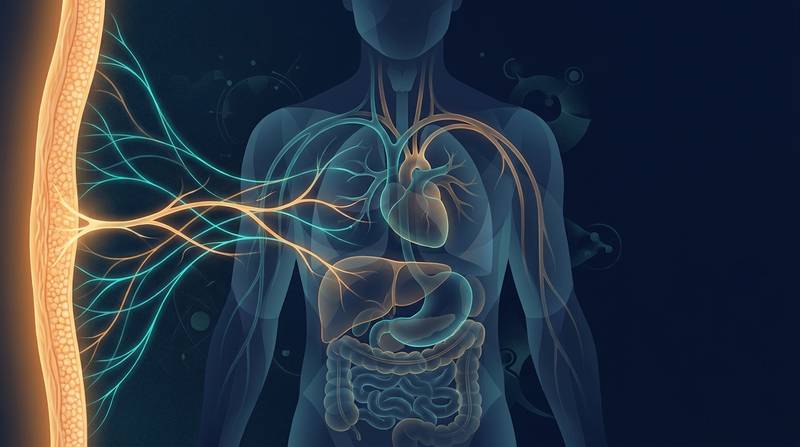
In patients receiving immune checkpoint inhibitors (ICIs), cutaneous immune-related adverse events (cirAEs) frequently develop early during therapy, but their relationship with broader multiorgan toxicity has remained uncertain. To evaluate whether cirAEs serve as early indicators of systemic irAEs, researchers analyzed data from the TriNetX multi-healthcare system network comprising 18,886 adult patients with primary melanoma treated with ICIs targeting PD-1/PD-L1, CTLA-4, or LAG-3. Investigators performed 1:1 propensity score matching (n = 2,979 per cohort) comparing patients who developed cirAEs within 6 months of ICI initiation to those who did not.
Time-to-event outcomes across 13 organ systems covering 54 individual irAEs were evaluated using Cox proportional hazards models. To ensure analytical robustness, a dual index-date framework was applied, anchoring primary analyses to ICI initiation for both groups and secondary analyses to cirAE onset for the cirAE cohort.
Thirty-two systemic irAEs across 13 organ systems were significantly associated with cirAEs, showing consistent associations across both indexing frameworks. The strongest associations occurred with systemic connective tissue diseases (HR = 3.45 [1.91–6.23]), mucositis (HR = 2.96 [2.11–4.14]), posterior segment and other ocular disorders (HR = 2.48 [1.53–4.00]), joint disorders (HR = 2.48 [1.96–3.13]), and inflammatory myopathies (HR = 2.40 [1.64–3.51]). Additionally, several toxicities were associated with cirAEs only in primary analyses, indicating they occurred before or near cirAE onset; no adverse outcomes showed associations exclusively after cirAE onset.
The study authors concluded that cirAEs represent non-exclusive early indicators of systemic immune activation during ICI therapy. Patients presenting with skin toxicities warrant close surveillance, early screening, and timely subspecialty referral to mitigate morbidity from multiorgan irAEs.
Key Takeaways
- In a propensity score-matched cohort of melanoma patients on immune checkpoint inhibitors, developing cutaneous adverse events within 6 months was significantly associated with 32 systemic irAEs across 13 organ systems, led by systemic connective tissue diseases (HR = 3.45 [1.91–6.23]) and mucositis (HR = 2.96 [2.11–4.14]).
- Elevated hazard ratios were also observed for posterior segment and other ocular disorders (HR = 2.48 [1.53–4.00]), joint disorders (HR = 2.48 [1.96–3.13]), and inflammatory myopathies (HR = 2.40 [1.64–3.51]).
- No systemic irAEs demonstrated associations exclusively after cirAE onset, while several toxicities occurred before or near cutaneous onset, supporting cirAEs as non-exclusive indicators of multiorgan immune activation.
Read the original sourceSupportive Care in Cancer