
Clinical Trials
Primary vs Secondary Efbemalenograstim Alfa for Neutropenia in Advanced NSCLC
Li et alCancer Biology & Medicine
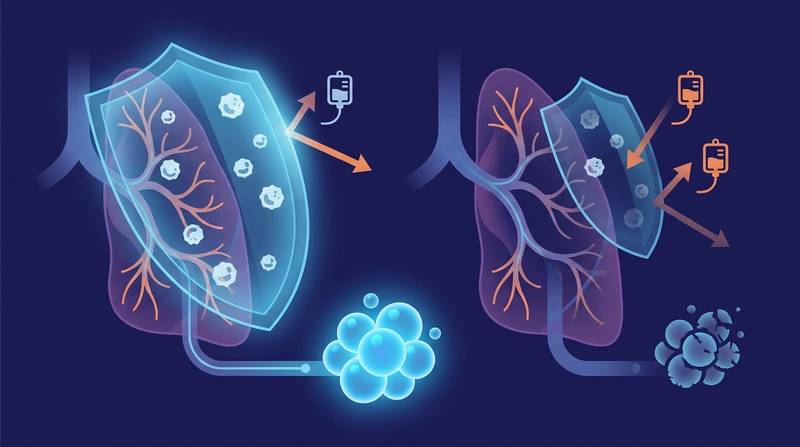
In chemotherapy-naïve patients with stage IIIB/IV non-small-cell lung cancer (NSCLC) receiving intermediate-risk platinum-taxane regimens and harboring additional risk factors, primary prophylaxis with efbemalenograstim alfa (EFBGα) demonstrated superior neutropenia control compared to secondary prophylaxis. EFBGα is a novel Fc fusion granulocyte colony-stimulating factor (G-CSF) evaluated to clarify prophylactic strategies in intermediate-risk settings where secondary prophylaxis is frequently utilized despite limited comparative data.
This multicenter, randomized phase II trial evaluated 96 analyzed patients randomized 2:1 to either primary prophylaxis (20 mg administered 48 ± 4 hours post-chemotherapy; n = 63) or secondary prophylaxis (administered only following grade 3–4 neutropenia; n = 33). The primary endpoint—cycle 1 incidence of grade 3–4 neutropenia—was significantly lower in the primary prophylaxis cohort (20.6%, 95% CI 11.5%–32.7%) than in the secondary prophylaxis cohort (57.6%, 95% CI 39.2%–74.5%), reflecting a statistically significant risk difference of -36.9% (P < 0.001).
The median duration of grade 3–4 neutropenia did not differ significantly between arms (P = 0.144). Cycle 1 febrile neutropenia incidence was 1.6% in the primary prophylaxis arm versus 6.1% in the secondary prophylaxis arm. EFBGα was well tolerated; adverse events related to treatment were predominantly grade 1 or 2, with pain-related symptoms representing the most common event (7.0%). These findings support the safety and efficacy of EFBGα in both settings, with earlier initiation yielding superior chemotherapy-induced neutropenia control.
Key Takeaways
- Primary prophylaxis with efbemalenograstim alfa significantly reduced cycle 1 incidence of grade 3–4 neutropenia compared with secondary prophylaxis (20.6% vs 57.6%; risk difference -36.9%, 95% CI -52.4% to -16.1%; P < 0.001).
- Cycle 1 febrile neutropenia occurred in 1.6% of patients receiving primary prophylaxis versus 6.1% receiving secondary prophylaxis, with mostly grade 1–2 treatment-related adverse events and pain-related events being the most frequent (7.0%).
Read the original sourceCancer Biology & Medicine