
Clinical Trials
Cancer Nanomedicine: Determinants of Clinical Failure
Jankowska et alBiology
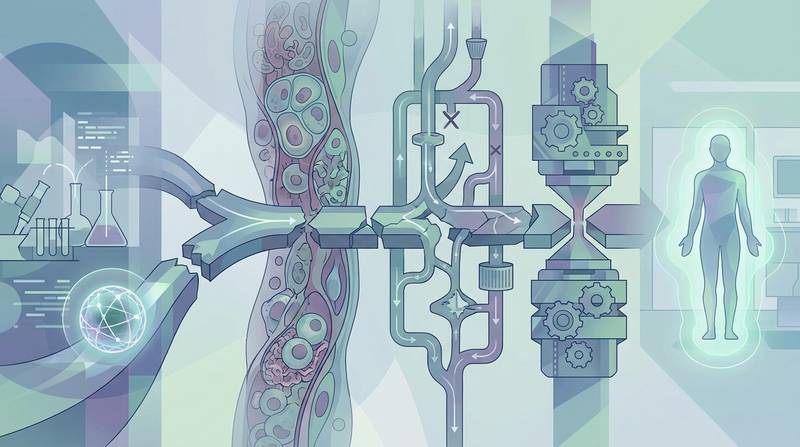
Despite substantial preclinical data demonstrating improved pharmacokinetics, targeted drug delivery, and enhanced tolerability, cancer nanomedicines continue to exhibit modest real-world clinical impact. A comprehensive narrative evaluation of clinical and preclinical literature reveals that this translational gap is driven by complex and interconnected biological, pharmacokinetic, manufacturing, and regulatory obstacles. Biologically, nanoparticle delivery is significantly compromised in vivo by rapid clearance via the mononuclear phagocyte system and the rapid acquisition of a circulating protein corona. In solid tumors, the physiological heterogeneity of the enhanced permeability and retention (EPR) effect, dense tumor microenvironments, and pronounced intratumoral heterogeneity collectively limit uniform tumor accumulation, deep tissue penetration, controlled drug release, and interpatient consistency. Beyond biological clearance mechanisms, substantial translation hurdles persist in pharmaceutical development. Key barriers include off-target organ accumulation, undefined long-term toxicological profiles, batch-to-batch variability, manufacturing scale-up complexities, and fragmented regulatory paradigms. Consequently, clinically approved formulations continue to consist almost exclusively of simple reformulations of validated antineoplastic agents using established delivery vehicles. Conversely, highly engineered or actively targeted nanosystems have struggled to substantiate their clinical safety and therapeutic superiority. Advancing the field beyond these bottlenecks requires aligning nanocarrier engineering directly with human tumor biology via biomarker-stratified clinical trials, standardized analytical characterization, and quality-by-design manufacturing principles.
Key Takeaways
- Clinically successful cancer nanomedicines remain predominantly restricted to established platforms and reformulations of existing cytotoxic agents, while actively targeted and structurally complex platforms frequently fail to demonstrate adequate clinical efficacy or safety.
- Translational delivery is critically impeded by physiological barriers—including rapid mononuclear phagocyte system clearance, protein corona dynamics, and heterogeneous enhanced permeability and retention (EPR)—which impair tumor accumulation and tissue penetration.
- Addressing translational attrition requires transitioning toward biomarker-guided patient selection, human-relevant preclinical modeling, and quality-by-design manufacturing to overcome batch variability and off-target toxicities.
Read the original sourceBiology