
A New Milestone for the AI-Powered Cancer Vaccine
Expert Perspectives · Waqas Haque, MD, MPH · 2026-10-06
Artificial intelligence (AI) in oncology is often positioned adjacent to the therapeutic itself: algorithms interpret imaging, extract phenotypes from the electronic health record, or help prioritize molecules during drug discovery. The recent phase 3 success of Moderna and Merck’s individualized neoantigen therapy, intismeran autogene (V940; mRNA-4157), represents something potentially more consequential. Here, computation is embedded directly within the process used to determine the composition of the medicine that each patient receives. At the same time, describing intismeran simply as an “AI-designed cancer vaccine” risks overstating the novelty of the underlying technology. The core computational approach dates back roughly a decade, well before the current AI boom.
In this edition of The Way Ahead: The Convergence of Technology and Cancer Care, Waqas Haque, MD, MPH, explores this major milestone for individualized neoantigen vaccines and how an algorithm developed years ago became part of a patient-specific medicine.
The Phase 3 INTerpath-0011 Trial
On August 19, 2026, Moderna and Merck announced that the phase 3 INTerpath-001 trial has met its primary endpoint of recurrence-free survival (RFS) and key secondary endpoint of distant metastasis-free survival (DMFS). The study randomized 1,137 patients with completely resected stage IIB-IV cutaneous melanoma to adjuvant intismeran plus pembrolizumab or pembrolizumab alone. Both improvements were described as statistically significant and clinically meaningful, although the hazard ratios and absolute survival differences have not yet been publicly reported. Overall survival remains immature. Nonetheless, this represents the first positive phase 3 study of an individualized neoantigen therapy and the first positive phase 3 trial of an mRNA-based cancer therapy.
Why This Matters in the History of Cancer Vaccines
Therapeutic cancer vaccines have generated enthusiasm for decades but have largely failed to deliver convincing late-stage results. Earlier approaches frequently targeted shared tumor-associated antigens, produced immunologic responses without meaningful clinical benefit, or were tested in patients with advanced, immunosuppressive disease. Sipuleucel-T remains a major historical exception: in metastatic castration-resistant prostate cancer, it improved median overall survival by approximately four months and received FDA approval in 2010. Yet it never became a dominant therapy, in part because of cumbersome leukapheresis and centralized manufacturing, substantial cost, the absence of conventional radiographic responses, and rapid emergence of competing prostate cancer therapies.
Therefore, Intismeran is not the literal first therapeutic cancer vaccine to succeed, but it may represent the first convincing phase 3 validation of the modern personalized neoantigen vaccine paradigm. Several factors may explain why it succeeded where prior vaccines did not: selection of patient-specific tumor neoantigens rather than shared self-antigens, targeting multiple antigens simultaneously, use in the minimal residual disease setting after surgery, and combination with PD-1 blockade.
How Machine Learning Helps Build the Vaccine
The process begins by sequencing tumor and normal tissue to identify somatic mutations unique to the cancer. The challenge is not simply finding mutations but determining which are most likely to produce clinically relevant neoantigens. These are peptides that are expressed, processed and presented by the patient’s human leukocyte antigen (HLA) molecules, and capable of eliciting an effective T-cell response.
Moderna’s computational system ranks these candidate neoantigens, after which up to 34 are incorporated into a single patient-specific mRNA construct. CEO Stéphane Bancel recently noted on the a16z podcast that approximately 90% of selected antigens differ from one patient to another. The algorithm is therefore not merely predicting whether someone will respond to an existing drug; its output helps determine the molecular sequence of the treatment manufactured for that individual patient.
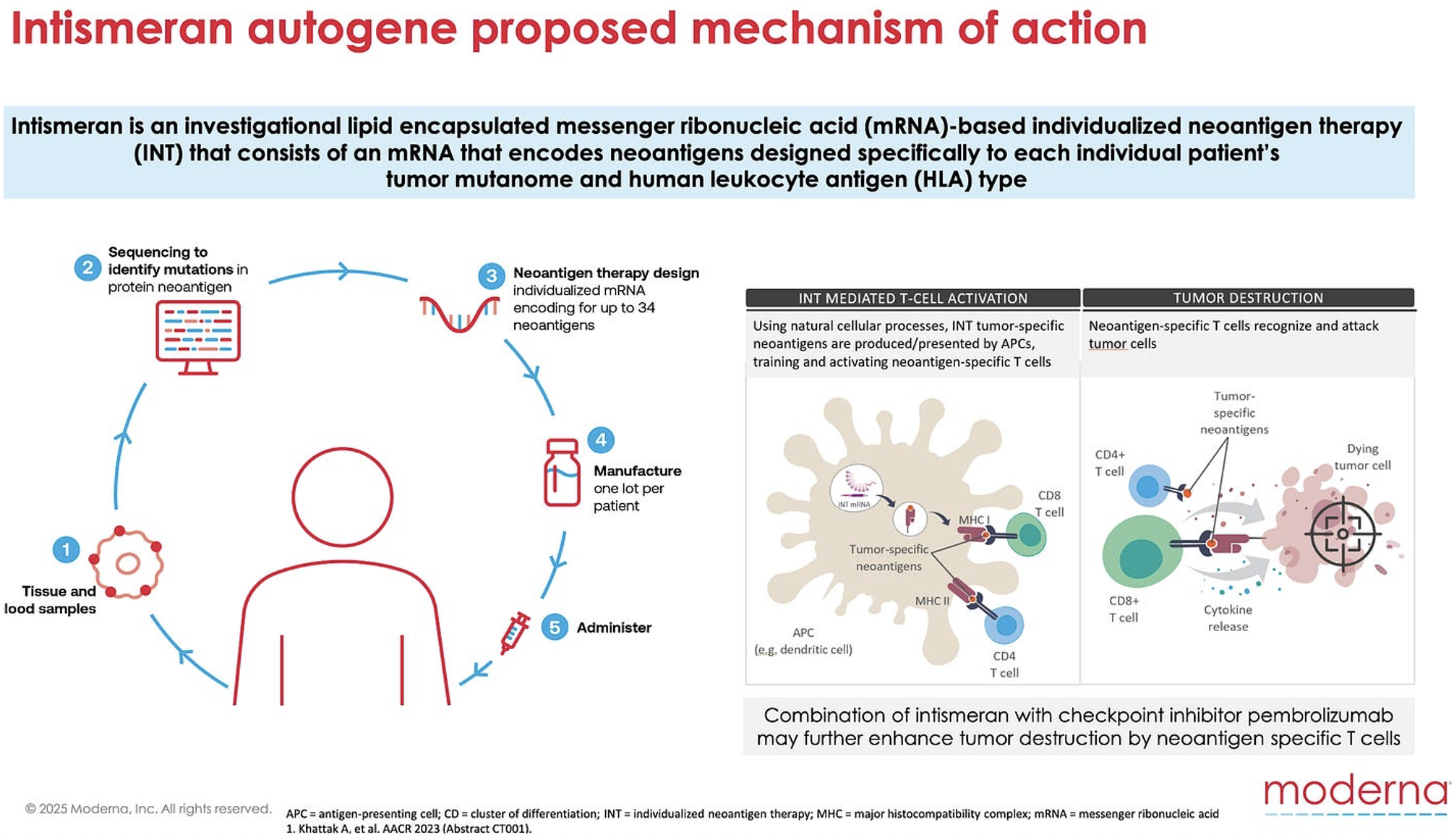
Shared from Moderna Analyst Day 2025
This distinction makes intismeran particularly interesting within the broader discussion of AI-enabled drug development. Moderna’s patent literature describes statistical and machine-learning approaches incorporating variables such as RNA expression, variant allele frequency, clonality and predicted HLA-binding affinity. The patents encompass methods including regression, random forests, support vector machines and neural networks.
But How Novel Is the AI?
Importantly, these methods predate the current AI boom. Moderna cancer vaccine patent families extend back to the mid-2010s, with more specific intellectual property around personalized epitope selection dating to approximately 2018. Stéphane Bancel went even further, describing the algorithm used in the phase 1, 2, and 3 programs as approximately a decade old. Moderna intentionally maintained essentially the same algorithm during clinical development rather than continually modifying the therapeutic-selection process.
That makes the interpretation more nuanced than a headline that reads, “AI has produced a successful cancer vaccine.” INTerpath-001 does not establish that modern deep learning or generative AI caused the clinical benefit, nor does it show that machine learning outperforms more conventional computational neoantigen-selection approaches. The complete proprietary implementation is also not publicly available.
What the study does demonstrate is arguably more concrete: algorithmic prediction is directly embedded in the generation of the therapeutic product. Unlike many “AI-discovered” drugs, where computational methods may operate years upstream during target identification or lead optimization, intismeran requires the computational step to be repeated for every patient.
Scaling a Drug That Is Manufactured One Patient at a Time
The other technological challenge is manufacturing. Every patient effectively requires a unique good manufacturing practice (GMP)–grade drug batch, creating a very different production model from conventional small molecules or monoclonal antibodies. Moderna has reduced the biopsy-to-treatment interval to approximately 42 days and is increasingly automating the process.
Moderna has also made a substantial investment in its dedicated Marlborough, Massachusetts manufacturing facility. Public plans have placed total investment in the expanded site at roughly $300 million, with anticipated capacity for tens of thousands of individualized doses annually. Moderna has not disclosed expected cost of goods or commercial pricing, however, and the economics of producing a bespoke therapy for every patient may ultimately be as important to adoption as its clinical efficacy.
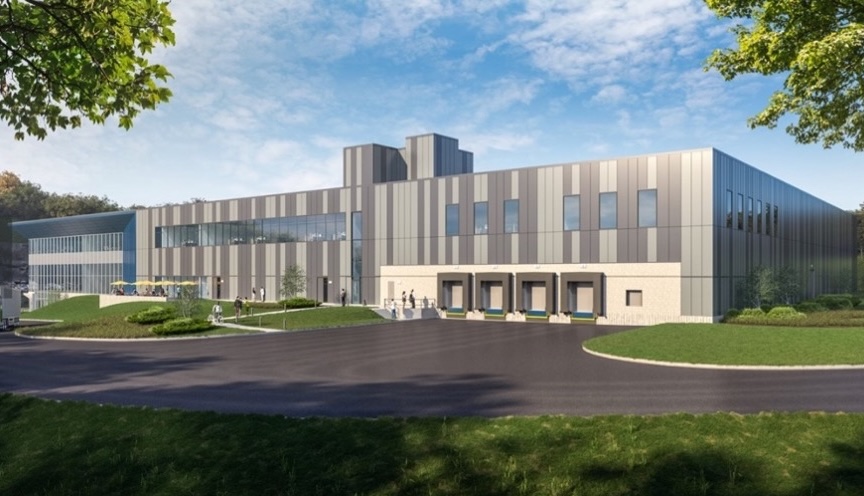
Moderna’s Marlborough manufacturing facility for cancer vaccine production.
Beyond Melanoma
Melanoma is likely only the initial test case. Moderna and Merck are developing intismeran across multiple solid tumors, including non–small cell lung, renal cell, and bladder cancers, with additional programs extending into pancreatic, gastric, and other malignancies. These studies may provide an even more important test of the platform because melanoma is unusually immunogenic and frequently carries a high tumor mutational burden. Success in less immunogenic malignancies would offer much stronger evidence that individualized neoantigen vaccination is broadly generalizable.
For AI-enabled therapeutics, intismeran may therefore represent a more informative case study than many drugs marketed as “AI discovered.” Its algorithm may not represent the cutting edge of contemporary artificial intelligence, and the phase 3 trial cannot isolate the contribution of machine learning from sequencing, mRNA engineering, manufacturing, or checkpoint blockade. Yet computation is unusually close to the final therapeutic intervention: patient-specific genomic data enter the system, an algorithm prioritizes antigens, and that ranking helps determine the medicine ultimately administered.
Conclusion
Perhaps the most interesting lesson is that clinical impact does not necessarily correlate with how sophisticated an algorithm sounds. A machine-learning system developed nearly a decade ago, embedded within an increasingly mature ecosystem of sequencing, immunology, mRNA technology and automated manufacturing, may prove more consequential than far newer AI models still several steps removed from patient outcomes.
If the full INTerpath-001 data confirm a clinically substantial benefit, intismeran will be an important milestone for melanoma, cancer vaccines, and mRNA therapeutics. It may also offer one of the clearest examples yet of computation becoming part of the medicine itself.
About Dr. Haque
Waqas Haque, MD, MPH, is a third-year Hematology/Oncology Fellow at the University of Chicago. He recently completed his Internal Medicine Residency at New York University (NYU) in a Clinical Investigator Track. Dr. Haque has balanced his patient care work with a variety of research projects. During his fellowship training at the University of Chicago, he plans to further his work in innovative clinical trial design, value-based care delivery to cancer patients, and clinical investigation.